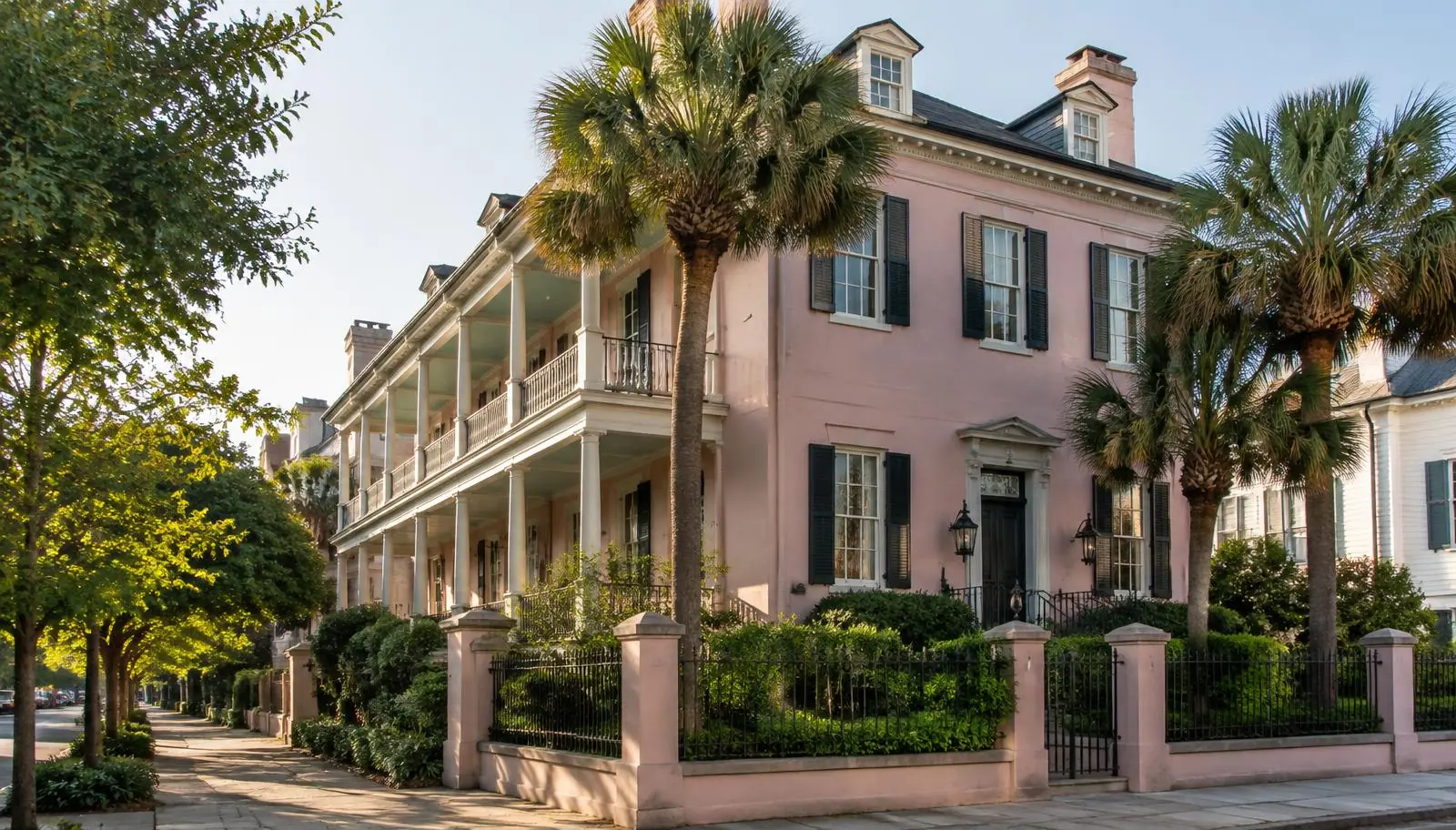
How Charleston regulates short-term rentals
City Council adopted the current short-term rental ordinance on April 10, 2018, after a task force reviewed the issue for more than a year. The city's STR FAQ describes the result as legalising short-term renting throughout the city in a very limited form.
For residential permits, the city's application form states that the record owner must operate the rental and reside on the premises overnight while guests stay, and the city requires a certificate tied to the 4% legal-residence property tax assessment. The form also says owners must not advertise or operate until approvals, inspections, the operational permit and a business licence are all in place.
The three residential categories
The city's category criteria divide residential permits by location. Category 1 covers the peninsula's Old and Historic District and requires, among other things, a building individually listed on the National Register of Historic Places, one STR unit per property and an extra off-street parking space. Category 2 covers the peninsula outside that district and the STR overlay, requiring a building at least 50 years old plus the same unit and parking limits. Category 3 covers areas off the peninsula, such as West Ashley, James Island, Johns Island and Daniel Island.
Neighbouring jurisdictions are different
Mount Pleasant, Folly Beach, Isle of Palms, Sullivan's Island, Kiawah Island and unincorporated Charleston County each set their own rules. A beach house on one of the islands may be governed by a very different framework from a home in the city, so we confirm jurisdiction first.
What the rules mean for a management plan
Because residential permits require the owner to live on site, Charleston city STRs are usually hosted arrangements: a carriage house, a garden suite or rooms within an owner's primary home. Investors hoping to run a whole-home city rental they do not live in should expect that to be unavailable in residential zones and should look at commercially zoned properties, the STR overlay, longer furnished stays of 30 nights or more, or a different jurisdiction. We will tell you plainly if the plan does not fit the rules.
For permitted hosts, our role is to make a small number of units perform as well as they can. That means pricing carefully, presenting the space beautifully, and running a guest experience that respects the fact that you and your neighbours live there.
Pricing a Charleston calendar
Charleston demand clusters around spring and autumn, with standout weeks for Charleston Wine + Food in early spring and Spoleto Festival USA in late spring and early summer. Weddings drive many weekends across the year, often booked well ahead by groups who need several properties nearby. The College of Charleston and the Medical University of South Carolina add parent visits, graduations and longer medical stays that behave differently from leisure demand.
We set event-week rates, wedding-weekend minimum stays and booking windows separately, and protect peak weekends from being sold too early. Quieter winter and high-summer weeks get different rules rather than blanket discounts. Our dynamic pricing management page explains how we approach this.
- Festival weeks and wedding weekends priced on their own curves
- Two-night or longer minimums on peak weekends where appropriate
- Medical and university stays supported with flexible longer bookings
- Shoulder-season rules that avoid undercutting your own peak dates
Presenting historic homes and garden suites
Guests choose Charleston for character, so listings must show it while being honest about what historic buildings involve: narrow staircases, older windows, street noise in the peninsula, limited parking. Clear descriptions prevent disappointed reviews. We rewrite titles around walkability to King Street, the Battery or the market, describe the piazza or garden accurately, and display the permit number where required.
If your property is a higher-end home or suite, our luxury vacation rental revenue management approach applies. For owners who prefer to use the home part of the year, our holiday home management page explains how we plan around personal stays.
Guest communication and day-to-day standards
Because hosts live on site, guest communication needs to be warm but clear about shared spaces, quiet hours, parking and access. We provide message templates for each stage of the stay and response standards that keep reviews strong. Under the Operate package we coordinate cleaning and maintenance once we have confirmed how those services will be delivered at your property; we do not claim a Charleston office or field team.
Hosting a carriage house or garden suite well
Many permitted Charleston rentals are a separate dependency behind the main house or a self-contained suite within it. These spaces can perform strongly because they offer what visitors want — character, privacy and walkability — but they need a clear guest experience. Guests should know exactly how to arrive, where to park, which outdoor areas are theirs and which belong to the household.
We help hosts design that experience: arrival instructions with photos, a short house guide covering historic features such as old floors, shutters or stairs, and recommendations that make the most of the neighbourhood. Small, consistent touches lead to the detailed reviews that help a single unit stand out against larger operators.
Pricing a single unit also differs from pricing a portfolio. With one listing, every gap night matters, so we pay close attention to stay-length rules around weekends and festivals and to the timing of last-minute adjustments.
Ways to work with us on a Charleston property
Every engagement starts with a consultation and a feasibility check of the property, its rules and its records. The four options below are the same ones described on our packages page; what changes in Charleston is the local planning behind them.
- Optimize — from $499 per property per month: pricing, listing optimisation and revenue reviews while you keep day-to-day control
- Advise — from $1,500 per engagement: a market position, rate strategy and written improvement plan your own team carries out
- Operate — custom quote: full management including listings, pricing and guest communication, scoped after we confirm how cleaning and maintenance will be covered for that property
- Zero Management — no management fee; only revenue above an agreed baseline is shared 50/50, which needs reliable performance history to set the baseline
Feasibility, not promises
We do not publish expected Charleston nightly rates, occupancy or income, and we do not guarantee results. Permit eligibility, category, parking and building age can decide whether a plan works at all. A consultation gives you an honest feasibility check and a written plan. For a broader view of our services see vacation rental management, and our fees guide explains how management costs are structured.